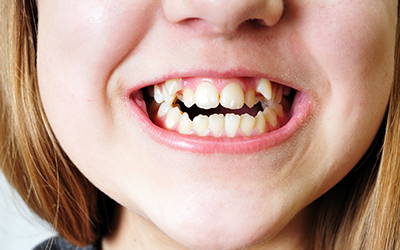
Every child's smile develops differently. Some children have naturally well-aligned teeth, while others develop crowding, spacing, or bite concerns as their permanent teeth emerge. Although only a dental professional can determine whether orthodontic treatment is necessary, parents can watch for several early warning signs. A routine pediatric dentist appointment provides an excellent opportunity to discuss your child's tooth and jaw development and determine whether an orthodontic evaluation should be the next step.
Crowded Teeth Can Signal Problems
One of the most noticeable signs that a child may need braces is crowded teeth. Crowding occurs when there is not enough room in the jaw for teeth to erupt in proper alignment. Teeth may overlap, rotate, or emerge in unexpected positions.
Crowded teeth can affect appearance, but they may also make effective brushing and flossing more difficult. When plaque remains in hard-to-reach areas, maintaining good oral hygiene can become more challenging.
Parents who notice significant crowding can ask about ortho Golden services to determine whether monitoring or treatment is appropriate.
Bite Problems Need Evaluation
The way the upper and lower teeth come together is another important part of a child's dental development. An overbite, underbite, crossbite, or open bite can affect chewing and may influence how the teeth wear over time.
Signs of bite problems may include difficulty biting certain foods, teeth that do not meet normally, or a jaw that appears to shift when the child closes their mouth. An orthodontic evaluation can identify the type of bite concern and help determine the appropriate timing for treatment.
Early Habits Can Affect Alignment
Certain childhood habits can influence tooth position and jaw development, particularly when they continue for an extended period. Persistent thumb or finger sucking, prolonged pacifier use, and other oral habits may contribute to changes in the bite.
A pediatric dentist appointment allows the dental team to evaluate whether a habit is affecting your child's developing smile. Parents can also receive practical guidance for helping children gradually discontinue habits when appropriate.
Other Warning Signs Matter
Not every orthodontic concern is immediately visible. Parents may notice changes in how their child eats, speaks, or moves their jaw before recognizing a problem with tooth alignment.
Signs worth discussing with your child's dental team include:
- Early, late, or irregular loss of baby teeth
- Difficulty chewing or biting comfortably
- Teeth that appear crowded, rotated, or unusually spaced
- Jaws that shift, protrude, or appear uneven
- Persistent mouth breathing
- Frequent cheek or tongue biting
These symptoms do not automatically mean a child needs braces, but they may indicate that further assessment would be helpful.
Early Evaluations Guide Treatment
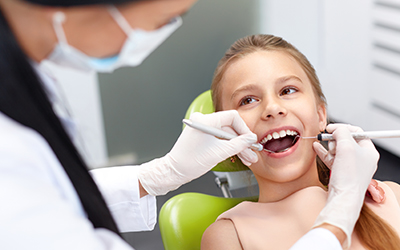
The American Association of Orthodontists recommends that children receive their first orthodontic checkup no later than age 7. At this stage, children typically have a mixture of primary and permanent teeth, allowing an orthodontist to evaluate developing alignment and jaw relationships.
An early evaluation does not necessarily mean starting braces immediately. In many cases, the orthodontist may simply monitor development until the optimal time for treatment. Families exploring ortho Golden care can use these evaluations to better understand their child's current and future orthodontic needs.
Treatment Options Change with Age
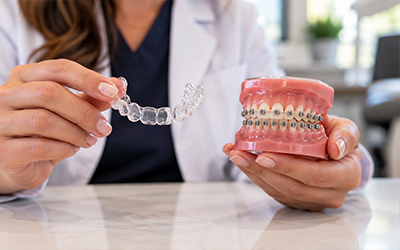
If treatment becomes necessary, the appropriate approach depends on the child's age, development, and specific orthodontic concerns. Traditional braces remain an effective option for many alignment and bite problems. For some older children and teenagers, Invisalign® Golden treatment may provide another option when clear aligners are clinically appropriate.
Because aligners must be worn consistently, candidacy for Invisalign® in Golden depends on more than tooth alignment. A dental professional will also consider the patient's maturity, treatment goals, and ability to follow instructions.
Healthy Development Starts Early
Parents do not need to diagnose orthodontic problems themselves. Regular dental visits allow professionals to monitor changes as baby teeth fall out, permanent teeth emerge, and the jaws continue developing.
By maintaining each recommended pediatric dentist appointment and seeking an orthodontic assessment when concerns arise, families can identify developing problems at an appropriate stage. Early attention to tooth alignment and bite development can provide more information, improve treatment planning, and help children work toward healthy, functional, and confident smiles.
Sources